Krishval Musings

Monday, 15 December 2014


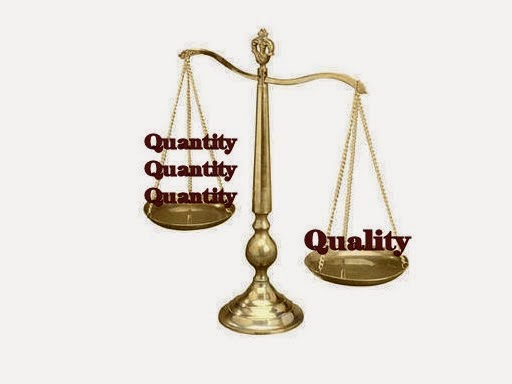
QUALITY PREVAILS OVER QUANTITY 
INDIA STILL BELIEVES IN QUANTITATIVE STRENGTH.
LESSON FROM BATTLE OF ADYAR   REMAINS UNLEARNED.

Quibble Island cemetery in MRC Nagar, R.A. Puram, Chennai Ref: www.google.co.in


Not many know  about the  200 year old cemetery in MRC Nagar near Chettinadu Vidyashram in R.A. Puram, Chennai.  There seemed to be a marsh island known as Quibble from the sea shore to the end of Mandeveli at the estuary of Adyar River.  A battle was fought in this place on October 24, 1746 AD and its significance is hardly known to the Indians.   This battle was hailed as a landmark in the history of the Indian army.  
                                                                                                                            
The battle known as “Battle of Adyar” (Battle of Madras) was between the army numbering about 11000 troops   of Arcot Nawab, led by Mephouz Khan, son of   Anwarudin Khan and the French army of 1300 men led by Captain Louis Paradis.   The result was a big surprise.  The Arcot Navab’s army was routed by the French which was outnumbered by almost 10:1.  It was hailed as a decisive battle that not only ensured the supremacy of the Europeans (French) but also revealed the importance of training the Indian natives in European style warfare.  It was a great revelation to the Europeans but unfortunately not for the Indians.   It was a clear demonstration of the universal reality that quality will prevail over quantity.   The British who were the bystanders of the conflict wasted no time in recruiting Indian soldiers and gave them training in the European warfare to improve their fighting ability.  The dividends were super rich for the British.  Many battles were fought after 1746 where the British with less number but well qualified and trained Indian soldiers could defeat the local Maharajas and Nawabs who relied on large numbers rather than on quality.
The British East India Company (EIC) was successful in conquering India with the help of trained Indian soldiers. Apart from their   superior fire power and effective planning & organisation their crafty diplomacy and crookedness of bribing the enemy commanders to betray their king were also crucial factors. (There were many traitors all over India)

A few of the EIC victories in decisive battles in India (70% of the EIC troops were Indians.)
Battle & year                            EIC Troop strength         Indian King. Troop Strength
Battle of Kaveri Pakkam1752          1600                                   Nawab of Arcot  5000
Battle of Plassey 1757                       3000                                   Sirj Ud Dawla   62000
Battle of Buxur 1764                         7092                                   Nawab of Audha  40000 .
Battle of Khadki 1817                       3000                                   Maratha Empire 28000
Battle of Aliwal 1846                       12000                                   Rajodh Singh  20000
Battle of Ferozsha 1845                  18000                                   Sikh Empire  30000

What the British military did in the last century is being repeated by many MNCs in 20th century.  Soldiers are replaced by knowledge and skilled workers from India. The situation has not changed even after independence.  It is the reflection of our inability to realize the importance of quality.

Quantity has proved to be superior in a few exceptional incidents such as the Korean War where the large number of Chinese soldiers wiped out the well trained and qualified US troops in 1950.     

How do you explain the superiority of quality over quantity? 
It can be explained by practical examples rather than by a concrete definition.
How was a small island nation called Britain in the North Atlantic  able to conquer and rule India for over two centuries despite the fact that India was almost 18 times more than the size of Britain and its population, wealth, knowledge and tradition?  We may attribute many reasons like our diversities and lack of spirit but the actual answer is the superior qualities of the British in several fields. 
Another convincing example can be seen in The National Geographic Channel.  Zebras and wildebeests (gnu) outnumber the lions and leopards by one to two hundred but they cannot fight and defeat the carnivores which are bestowed with high qualities like courage, strength, skill, speed, manuvourability, intuition and wisdom. They have the brain power to plan a strategy to get their food.  They fear neither the larger size of their prey nor the large numbers of their herd.  The herbivores, despite having overwhelming   numerical strength, lack the mental power and sense of unity   to organize themselves and make a concerted retaliation against the predators.     

 Single Lion confronts a herd of wild buffaloes. www.google.co.in

CONCLUSION.

Indians have the instinct of fearing and respecting large numbers and big figures.  This syndrome has escalated further due to the new trend of empowerment by which the mediocre and opportunists have been taking control with the help of their majority. We are getting into a situation whereby the tail wags the dog.   This misconceived democratic process has grossly undermined the quality of education, governance, relationships and development.
There is general apathy towards achieving high quality among Indians.  The merit of the institutions like religious centre, hospital and university is judged by the large visiting crowd.   There is a misleading analogy that large crowd is attracted by quality.  The attraction for the gullible Indians is driven more by avariciousness, superstition, bias, ignorance and the timid instinct to follow the crowd.
Indians suffer from an over dose of pity, sentiments and meekness.  Quality will be maintained only by a strong mind which shuns mediocrity.  Quality should be enforced, it cannot be developed by passive means. Aspirations of India can be achieved only if she follows   nations like  Singapore and   China  which  were like India four decades ago but   are now admired by the world  for their tenacity   in  improving the quality  and power of their numerical strength  by imposing tough and progressive governance.   

The Quibble Island event has left a clear   message on the forward   for us; unfortunately it remains unread even after two centuries.   


Dr. Krishnan Arunachalam


‘The Decisive Battles of India from 1746 to 1849 Inclusive’. by G.B. Mellison.
‘A Madras  Miscellany’ by  S. Muthiah


(Published in Mylapore Club magazine Sep/14 by the author) 
Know your less known hero:
Kanhoji Angre, the only known Admiral of medieval India.


The novel “Jala Deepam” by Chandilyan caught my attention when I was glancing through the library of the Mylapore Club. It was a historical novel based on the life of Kanhoji Angre a Maratha navy commander. 

India never had a naval history because of the taboo on crossing the ocean, locally known as “Kala Pani”.   The only recorded naval force was that of   Rajendhra Cholan of Thanjavur in 10th century.  His powerful navy dominated    the entire Bay of Bengal  right upto the Malacca straits in Singapore. There are no historical evidences of a strong Indian navy in the western coast in spite of centuries of overseas trade. 
The western coast became very active ever since Vasco da Gama visited Calicut in 1498 AD.  The European colonizers started crowding the western coast  to establish their trade monopoly as there was  no Indian naval  force to control them in the Arabian Sea.  Portuguese and the British were the dominant forces from Surat to Cochin a stretch of over 3000 KM long. The eastern coast was wide open  and a cakewalk to the  European colonizers .


                             Rajendra Chola n”s overseas domination Ref: www. Wikipedia.com  

Chatrapathi Shivaji the great Maratha Emperor   (1627 – 1680 AD) realized the importance of sea security and developed a coastal navy to protect his large kingdom from Gujarat to Goa.  According to Captain H. Balakrishnan (Ind. Navy Rtd)   Shivaji's acumen in building forts guarding the entrances to harbours like Vijaydurg, Ratnagiri, Malwan, Sindhudurg etc along the Konkan Coast, reflects a deep strategic thought process. One has to actually see the location of the forts to understand Shivaji's brilliance.


                                   Chatrapati Shivaji, Maratha Emperor

Kanhoji Angre (1669-1729 AD), a   privateer (an armed individual navy adventurist) from a village near Pune  emerged as a powerful and successful naval commander of the Maratha navy. He was made the Admiral (Sarkhel)  by the then King   Chatrapathi  Rajaram   in 1699 AD.  He gained almost total control over the western coast.    He was challenged by the British, Portuguese, Dutch, and Siddis(immigrants from Southeast Africa) of Moguls, however, none of them were able to contain his domination.  He became a terror to the greedy European trading companies and held the Maratha supremacy until his death in 1729AD. 
Following were his engagements against  the Europeans and Siddis .
1702 - Seized small vessel in Cochin with six Englishmen.
1706 - Attacked and defeated the Siddi of Janjira.
1710 - Captured the Kennery (now Khanderi) islands near Mumbai after fighting the British vessel Godolphin for two days.
1712 - Captured the yacht of the British President of Mumbai, Mr. Aislabie, releasing it only after obtaining a hefty ransom of Rs. 30,000.
1713 - Ten forts ceded to Angre by British.
1717 - British ships bombarded Kennery island and Angre signed treaty with Company paying Rs. 60,000.
1718 - Blockaded Mumbai port and extracted ransom from English East India Company.
1720 - British attacked his HQ Vijaydurg (Gheriah), but failed.
1721 – British led by Commodore Thomas Mathews and Portuguese jointly attacked Alibagh, with 6000 soldiers but were defeated by Angre.
     1723 - Angre attacked two British vessels, Eagle and Hunter
    1724 – The attack on Vijayadurg by the Dutch with 7 ships and 1000 soldiers          was repulsed with heavy loss for the Dutch.
                        
He did not have well equipped battle ships like the Europeans; however, with the help of some 150 over grown fishing boats and his own courage and tactics he was able to remain undefeated by his enemies.  According to Rear Admiral Satyindra Singh(Retd) the success of the Maratha Fleet against bigger and better equipped ships of England, Portugal and Holland and those of the Moguls and the Arabs stretching over several decades was mainly due to Kanhoji's tactics of using a large number of light, strong and fast craft, adequately equipped, which surrounded the heavier vessels of the enemy and simultaneously attacked them from all sides "thus overwhelming the crews of the enemy ships and then boarding them and putting them out of action by scuttling them or setting them on fire

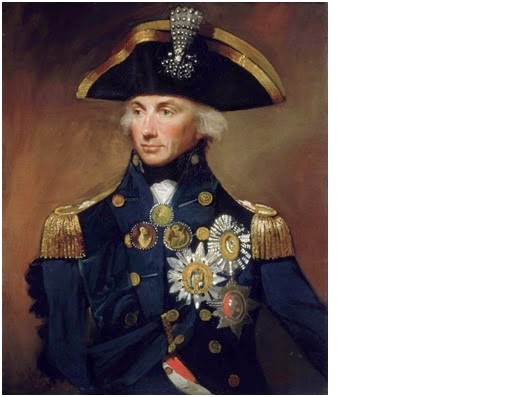
Though he was confined to defending the western coast and did not venture out   in the open sea/ ocean for expeditions, he can be compared with the most adored Lord Nelson of British navy who had the same qualities of courage and brilliance that gave him victories in many naval battles against Napoleon.  Kanhoji was the only known Indian Admiral who demonstrated a superior sea power of India to the arrogant Europeans.   Frustrated by the humiliations inflicted and   their inability to defeat the valiant hero, the British unleashed their   mudslinging by branding him as a pirate and denying him the dignified status of a naval commander.   The same British knighted (Sir) Francis Drake in 1571 AD, an English privateer and a slave trader who was a wanted pirate by the Spanish and Dutch governments

Kanhoji’s  descendents however could not continue his valiant deeds and maintain the dominance of the Maratha navy.  The British were able to overpower the heirs of Kanhoji when the Maratha Chieftains neglected the importance of naval security. The first Indian naval chief of staff of independent India was Vice Admiral Ram Doss Katari  who took charge in 1958, 230 years after Kanhoji.   Absence of sea power provided a valuable leverage to the European conquest of India.   A very strong navy is a must to protect the 7500 km long coast line from Gujarat to West Bengal, a lesson to be learned from our past.   

Conclusion:

The Indian Government has adequately honoured Kanhoji Angre by naming the Western naval command as INS Angre, erecting   his statues in Mumbai, renaming the old Kennary light house as Angre lighthouse and releasing postal stamp with his picture in 1999AD.

It is surprising to find The Indian Encyclopedia edited by Subodh Kapoor mentioning Kanhoji ‘a Maratha sea captain or pirate chief.’

I found that the history books speak more about the freedom fighters after the Sepaih mutiny in 1857AD and neglect the prior years.  As I do not know about Kanhoji Angre, I feel the people in the North may not know about Katta Bomman or Mardu Pandiar or Dhalavai Velu Thambi of South.  Although the Indian Government has given due recognition and honour to these regional brave hearts, the history books should have a holistic coverage as a unifying force to prevent sectarian politics.   

Dr. Krishnan Arunachalam


-Ref:
Jala Deepam, Tamil Novel  by Chandilyan.
The Indian Encyclopedia (Ed). Subodh Kapoor Vol.13 page 3868, Cosmo Publications, ND
-http://www.bharat-rakshak.com/NAVY/ Chiefs/132Personnel/ -RD-Katari
-knoje angre/Pauline's Pirates & Privateers  http://paulinespiratesandprivateers.blogspot.in/
-http://www.gatewayhouse.in/kanhoji-angre-indias-first-naval-commander/
-UNDER TWO ENSIGNS THE INDIAN NAVY 1945-1950 Rear Admiral SATYINDRA SINGH AVSM (Retd)
indiannavy.nic.in/sites/default/files/under2ensigns.pdf


Horatio Lord Nelson of British Navy.  Re: Wikipedia.com


(Published in Mylapore club magazine Aug/2014 by the author)


Sunday, 14 December 2014


KAUTILYA’S ARTHA SASTHRA AND THE PRESENT DAY KINGDOMS 

OF MNCs.

                                     An Artist impression of Kautilya

Kautilya’s Artha Sasthra was a guide for the practice of statecraft.  It advises elaborately about the techniques, tactics and policies  required for a king to manage his local administration, foreign relations, enemies, friends, relatives, armed forces, his cabinet ministers and a few more.  This 2000 years old and well researched work on politics, public administration  is being hailed by many Indian and foreign scholars.    

Kautilya gave four broad tactics for a king to handle his enemies, competitors and adversaries:
SAMA:    It is a peaceful approach and he gave six types of peacemaking.
-         Praising the Merits, Mutual connections, Mutual benefit, Inducements, Identity of interest, Awards and honours.
DHANA :
-         Reward with Money, Grants, Favours, Gifts and Exempt from taxes.
BEDHA:  
-         Create confusion, Make threats.
DHANDA: 
-        Use of physical force, Depriving liberty & wealth, Harassment and Plunder.  .

The guide was very useful to the kings until the last century.   The days of the kings and dictators are over; however, the Multinational Corporations (MNCs) particularly from the USA have established their own economic kingdoms and the Directors and CEOs are the modern kings.  They follow the above theory of Kautilya in order to subdue their competition and increase their economic power. 
Following is an imaginative drama based on a real incident in the USA. 

A monopolist multinational corporation engaged in air traffic control (ATC) came to know about a young engineering graduate   who developed an advance system of ATC superior to their existing system.  They were alarmed and decided to overpower the new discovery using the Kautilya theory.

SAMA:  A high level officials of the MNC met the young engineer. They praised his achievement and offered him a lucrative and influential position as a Senior Vice President in their company and requested him to be in charge of his new system worldwide.  They also indicated the bright possibility of his becoming a board member soon.
The young man thanked the officials, however, declined the offer saying that he has his own plans and prefers to go by himself with the new system.   SAMA failed

DHANA:  A couple of weeks later the MNC sent a letter offering to buy his system for 10 million dollars with exclusive rights.  The youngster declined the offer giving the same reason.
The MNC followed up with another letter apologizing for having underestimated the value of the new system and hiked the price to 15 million dollars.   The enraged engineer almost shouted,” I made my decision clear, please leave me alone and stop bothering me”.   DHANA failed twice.

BEDHA: After a few days the youngster received a legal notice from the company lawyer accusing him for having copied without their permission some of the components of their system in developing the new one.  He charged him under infringement of patent rights and demanded 10 million dollar as compensation.  He further frightened that if infringement is proved, the youngster may be imprisoned.
The valiant youngster retorted, “I know what I have developed.  If you want to take me to the court, please go ahead, I am ready for it.”   BEDHA failed.

DHANDA: The MNC did not use this technique as it may lead to criminal complication jeopardizing its very existence although it is very easy to arrange a contract hittman against the youngster. Dhanda was given up as it might boomerang with a heavy toll.  

They decided to develop a fifth formula by combining the first three techniques. Kautilya recommended combination of techniques in the case of allies and enemies which may ensure success because the different methods mutually reinforce each other. (Artha Sasthra 9.7.70, 71)   
They successfully identified the close relatives and friends of the youngster, developed a good link with them and through their relationship persuaded the youngster to accept a new deal. They tried to convince him that going alone is a very tedious process for an inexperienced individual to initiate and manage a complex business.   The brainwash by the relatives and friends was successful.  The youngster budged.   A new deal was struck. The MNC got the exclusive rights by making a onetime payment of 7 million dollars and agreed to pay 5% commission on the sales of his product which is much higher than the normal commission rate of 2%. The estimated market for the system   was over 100 million dollars a year.  Everyone was happy.

DRAMA CONTINUES.

The MNC having got the exclusive rights   dumped the new system in a cupboard and did not sell it. They continued with their own old system and did not bother to introduce the new version   which will cost them.   The young engineer was left in the cold with just 7 million dollars and lost his rights over the new system.

Kautilya said,” In the interest of the prosperity of the country, a king should be diligent in   foreseeing the possibility of calamities, try to avert before they arise, overcome those which happen, remove all obstructions to economic activity and prevent  loss of revenue to the state” (8.4.50, 8.5.2.1).
The MNC religiously followed the above theory of Kautilya and removed the young engineer’s obstacle to their business.

Dr. Krishnan Arunachalam.

Ref:
This drama was given as a speech by the author himself at the LA 1924 Toastmasters club, Bangalore in December 2002 under the caption:”Formula No. 5”.  .
Kautilya : The Artha Shastra by  L.N. Rangarajan, Penguin books, New Delhi.


Vulture capitalism Ref; thepolticalcarnivael.net

(Published in Mylapore Club Magazine Jul/2014 by the author) 
Half a Ton of unguarded gold - Chidambaram Thillai Nataraja Temple.

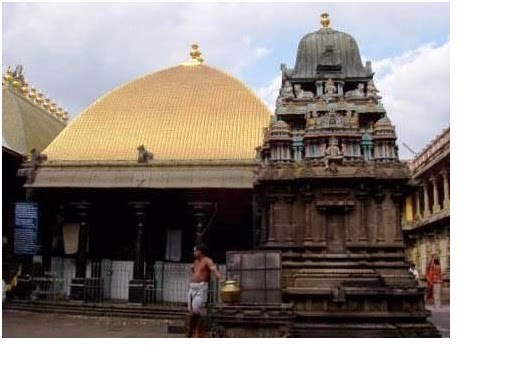
Golden roof over the Kanaka Sabah.

Very few know about the true philosophical significance of  Thillai Nataraja temple (PonAmbalam).  It is not just a temple but a university, where the Tamil scholars presented their works before they are made public.  It is a Sabah, a public place where the scientific, religious, literary and art talents are exhibited for acknowledgement and approval. It is considered to be the supreme of all five sabhas in Tamilnadu (Chidambaram, Madurai, Kutralam, Thiruvalankadu and Thirunelveli).    It is the primary temple (Koil) of all the 275 Padal Petra sthalangal; it is also one of the Pancha bootha  sthalams representing the Akasam  (inner and outer space).  Three of the five Panchaboothasthala temples, those at Kalahasti, (wind) Kanchipuram (Earth) and Chidambaram all stand on a straight line exactly at 79 degree 41 minutes East longitude - truly an engineering, astrological and geographical wonder. This temple is popularly known as Thillai  Ambalam, synonymous with openness and transparency.    It is a temple more for the learned than for commoners.
 Dr. Anandha kumaraswamy (Sri Lanka), philosopher and historian of Indian culture described lord Nataraja as “a synthesis of science, religion and art.  Rishi Patanjali positioned on the left side of Lord Nataraja developed the Yoga Sutra which may be hailed as a great contribution of India to the world. Yoga is the brand ambassador of India to the world.
According to history, Emperor Paranthaka Cholan paved the golden roof in the 9th century over the extension of Chit Sabah known as Kanaka Sabah with 21,600 golden tiles in the form of Vilva leaf with the word SIVAYANAMA inscribed on them representing 21600 breaths. The golden tiles are fixed using 72,000 golden nails which represents the number. of Nadis exist in the human body. The roof is topped by a set of 9 sacred  kalasas, representing the 9 forms of energy. (Approximate weight could be 500 KG of gold.  1000 KG =one ton))

 My focus is not on the divine side highlighting the Arudra Dharshan ,   concept of Cosmic Dance, Chidambara  Rahasyam  and  Thillai Govindaraja Perumal  but on the miracle as to how approximately half a ton  of gold lying open to the sky without any protection survived  11 centuries.
It was a here say from the Dhishidras that the deity of Lord Nataraja and Sivakami  were taken as far as Allepy in Kerala during the invasion of Malik Kafur in  the 14th century.  He plundered many temples in Tamilnadu but the golden roof remained un scathed.  There are no historical evidences that it was destroyed and rebuilt again.
The period of 17th and 18th century was a kind of dark stretch in the history of India particularly South India.   There were no big empires in the South.  The whole of South India particularly the Pondicherry to Chidambaram belt was ravaged by power struggle among Marathas, Hyder Ali and the forces of East India companies of Britain and France for over a century.  The Marathas,  after Shivaji’s death, were not very active but the  Maratha influence can be seen in many parts of Tamil Nadu particularly in Thanjavur.  The temple was occupied by these warring forces and was used as a fort with cannons mounted on the 25 feet tall outer stone walls.      
 Comte De Lally arrived at Pondicherry as Governor with a clear mandate to oust the British. He ran out of cash to feed his army.   He took extreme measures to replenish the near empty treasury by levying contributions from the local rulers.  He led a strong contingent towards Thanjavur to collect the debt from the ruler.    On his way he plundered the town of Nagore, ransacked  a few   temples searching for gold and ornaments.  He executed six Brahmin priests and unleashed terror.   Is it not a mystery that he did not try  to plunder  the Chidambaram golden temple which is just 60 kilometers away from the French Head Quarters in Pondicherry?
Hyder Ali supported by the French occupied Chidambaram for 4 years.   During this gloomy period the deity was hidden near Thiruvarur and did not have regular pooja for 30 long years, however the golden roof remained untouched.  Colonel Eyre Coote of British East India Company defeated Hyder Ali in a decisive battle in Porto Nova (Parangipettai) near Chidambaram in 1781 AD and decimated his dominance in the region.   The century old power struggle in the region that threatened the temple came to an end by 1800 AD.
Half a  ton  of gold lying exposed to the sky   and unprotected for more than a millennium in a country which was invaded and looted by many foreign forces for several centuries is a great wonder.    Who is guarding them, is it Lord Nataraja? One logical reason could be a stiff  resistance   from the local population in and around, but Chidambaram is a small town.   Perhaps the intricate technology of the roofing and strength of the materials prevented against dismantling and provided an all weather cover for over1100 years,.   Reluctantly, I can  attribute the following reasons based on presumptive logic for the inexplicable survival of the Pon Amanbalam. (1) The great devotion of   the Emperor  Paranthaka Cholan, (2) The dedication and tenacity of the Thillai Dhishidars  who managed the temple  with strict adherence  to  Vedic  and Agama rituals despite several political and military  challenges.  (3) The magnanimity of the rich and powerful Adhinams  who control numerous rich and famous temples in the region but  did not  interfere with the Nataraja temple. (5) The charity of the Nagarathar community of Chetti Nadu   (5) Above all the deep devotion of the citizens of Tamiilnadu.

Dr. Krishnan Arunachalam.
References
History of the French in India by George Bruce Mellison.,
Political History of Carnatic Nawabs by N.S. Ramaswamy,
The Private Dairy of Anandha Ramgam Pillai.,
A South Indian Journey: The Smile of Murugan by Micheal Wood.  (Penguin Books)
The City of Cosmic Dance – Chidambaram by B. Natarajan (Orient Longman),
Ummudi Bangaru Chetty Jewelers.( opinion on the weight of gold on roof)


  Colonel Sir Eyre Coote


 Patanjali in the form of a serpent on the left of Lord Nataraja


(Published in Mylapore Club magazine May/2014 by the author)


THE INDIAN CULTURAL EMPIRE:  UNKNOWN TO THE INDIANS.

Will an average Indian believe that the Cultural Empire of India is as large as shown in the picture?    The map shows that the empire stretches from Japan to Indonesia covering 17 nation states.  Let me enthrall you with a brief of our Cultural Empire.
Indian cultural empire is larger than the Roman Empire and was established not by military conquest but by peaceful, philosophical and intellectual attraction and appeal.  Historians call the Southeast Asia as “Farther India” and “Trans Gangetic Plains”. Both Hinduism and Buddhism that originated from India had deep impact on the social, religious, economic and political history of the entire Asia Pacific region.       Buddhism is well entrenched in the North East Asia (Japan, China, Korea, Mongolia) whereas the Southeastern sector was dominated by Hinduism and Buddhism.  The two religions competed with each other in a peaceful and civilized way without any dispute or animosity unlike the West where religious wars were common; and it is still happening.  When India became weak due to foreign invasions,  Hinduismt could not sustain much in the region after the 15th century; however Buddhism spread and maintained its dominance, thanks to the Chinese connection. 
A few quotes of Western and Eastern historians and leaders:                          
French scholar, Sylvain Levi (1863-1935) Orientalist who wrote on Eastern religion, literature, and history.  
"From Persia to the Chinese Sea, from the icy regions of Siberia to the islands of Java and Borneo, from Oceania to Socotra, India has propagated her beliefs, her tales and her civilization. She has left indelible imprints on one-fourth of the human race in the course of a long succession of centuries. She has the right to reclaim in universal history the rank that ignorance has refused her for a long time and to hold her place amongst the great nations summarizing and symbolizing the spirit of Humanity."
Suharto Sukarno (1901- 1970) Indonesian nationalist leader and the first President of Indonesia. (Sukarno was a Muslim)
"In the veins of every one of my people flows the blood of Indian ancestors and the culture that we possess is steeped through and through with Indian influences. Two thousand years ago people from your country came to Jawadvipa and Suvarnadvipa in the spirit of brotherly love.” 
Norodom Sihanouk, Head of the State of the Royal Government of Cambodia (1954-1970 and, again, since 1993)   
"In fact, it was about 2000 years ago that the first navigators, Indian merchants and Brahmins brought to our ancestors their gods, their techniques, their organization. Briefly India was for us what Greece was to Latin Orient."
Will Durant  American historian, observed 
 “In Asia all roads lead from India.”   (“All roads lead to Rome” was the saying the West)
Philip S. Rawson writes in his book The Art of South East Asia:

"The culture of India has been one of the world's most powerful civilizing forces. Countries of the Far East, including China, Korea, Japan, Tibet and Mongolia owe much of what is best in their own cultures to the inspiration of ideas imported from India. No conquest or invasion, no forced conversion imposed them. They were adopted because people saw that they were good and that they could use them..."

           
Japan, Korea, Mongolia and China 
J Eminent Zen Scholar - "The study of Japanese thought is the study of Indian thought.” Dr. D. Suzuki. "India is culturally, Mother of Japan. For centuries it has, in her own characteristic way, been exercising her influence on the thought and culture of Japan."

India Conquered and dominated China culturally for 20 centuries without ever having to send a single soldier across her border. Hu Shih  ( Chinese scholar and diplomat)
Thailand
Thailand is a Buddhist country with almost 95% of its population practicing Theravada Buddhism.    Ramayana is very popular and is known as Ramakein.  Sanskrit language has dominated the country for several centuries. The culture is a combination of both Hindu and Buddhist religions.
 Vietnam.
 Myson temple ruins dedicated to Lord Shiva (Badreswara) was named after the king Badravarman.  Buddhism is the major religion however sizable population claims no religion due to influence of communism.
Laos:
 Ramayana is well known in Laos, a Buddhist country.     Ramayana and Mahabharata are well known in the whole of Southeast Asian countries. The Laotian adaptation of the Ramayana is called Phra Lak Phra
Cambodia (Derived from the name kambhoj)
 Cambodia was a replica of the Kalinga kingdom in  Orissa/Andhra region. The Funan Empire was hailed as the Roman Empire of the region.  The official language was Sanskrit and Manu Shastra was the official code of conduct.
The entire Indochina states, (Laos, Cambodia and Vietnam) Myanmar, Thailand and Yunnan province of China were part of the Indosphere, also known as Suvarna Bhumi.   The names of the kings who ruled the Funan and Khmer Empires were:
Sri Indraditya; Yaso Varman;  Rudra Varman;  Jaya Varman  I to VII;  Harshavarman;  Rajendravarman; Isana Varman;  Badra Varman;  Surya Varman II ( builder of Angkor Wat).
The Indianised Kingdoms were:  Mujapahit, Mataram and Sri Vijaya, Silendra and Airlangga in Malaysia and Indonbesia; Khmer and Funan in Indochina and Srikshtra in Myanmar
Malaysia /Singapore
Kedah. (Kataram) a part of present Malaysia was part of the Sri Vijaya Kingdom.  It was annexed by Rajendhra Cholan of Tanjore and was under the Chola Empire for a century.  This was the only recorded military conquest from the mainland India.  There are many Sanskrit words in the Malaysian language.
Parameswara (1344 – 1414), also called Iskandar Shah was the last king of Singapura (Singapore) who ruled from 1389 to 1398.
Indonesia:  
Though, a Muslim country its culture and language are more of Indian origin. 
Their national airline is known as Garuda Airways.
Indonesian defence ministry gave an honorary award to General David Hurley of Australia in 2012, with one of Indonesia's highest military honour “Bintang Yudha Dharma Utama” (Except Bintang others are Sanskrit).
Bali in Indonesia is well known for its version of Ramayana. The  Sanskrit word “Bhumi Putra” ( son of the soil) is commonly used all over Southeast Asia.
 
Philippines
According to Alfred Louis Kroeber (1876-1960), American anthropologist, and a major figure in the founding of modern anthropology, as well as author of Peoples of the Philippines (1919):
Most of the folklore of the Philippines is of Hindu origin”
 Two Filipino scholars, Tavera and Paterno, have concluded that about 25% of the Philippine vocabularies can be traced to Indian influence.
Brunei Darussalam:  
The capital city, Bander Seri Begwan is originally a Sanskrit word.  It was part of the Indianised kingdom of Mujapahit until the 15th century.  
Indonesia, Brunei, Philippines, Singapore and parts of Malaysia are known as Suvrna Dvipa; whereas India is known as Jambu Dvipa.  
Myanmar: 
 The most revered Buddhist shrine, Shwedagon Pagoda, was built by two merchants from Ramanya who met with Lord Gowthama Buddha.  This 2500 years old pagoda is covered with hundreds of gold plates encrusted with 4351 diamonds and 2317 rubies.  
Sri Lanka:  The cultural and religious connection with India needs no elaboration. .
Conclusion
Indians are generally submissive and not proud of themselves.  Sri Narayanamurthy of Infosys in his book titled “Better India, Better World” rightly pointed out that the self esteem of average Indian is very low due to foreign rule for over 800 years.   
There is no reason at all for us to feel inferior.  We are not aware of our own knowledge power, civilization values and the great impression we created. 
We have been looking at the West for everything and also wasting our time, resources and energy for the last 60 years with our belligerent neighbours who refuse to acknowledge their Indian origin.  We should start looking seriously at our friendly and reliable cultural cousins just across the Bay of Bengal and develop intimate relationship. 
.It is very disappointing that the prescribed history books for schools and colleges are not elaborating the Cultural Empire of India in the Asia pacific Region. It is disheartening that they speak more about our slavery under the Moguls and Europeans.
The Indian Government has taken steps to restore and maintain a few of the ancient monuments in South East Asia and is also trying to attract Buddhist tourism. The government sent a ship called Sudharshini which called on many ports in the Asia Pacific region to rekindle the Indian culture and heritage.  This is not enough. Similar trips and voyages  should be initiated within India with ships, trains and trucks and make the Indians aware and  feel proud of their Cultural Empire.  The Indian government should encourage and strengthen the two way tourism between India and Asia Pacific.
End
Dr. Krishnan Arunachalam.
Ref;  
www.hinduwisdom.info/Suvarnabhumi.htm,
Hindu Kingdoms of South East Asia by R.K. Kanchan.
www.about.com (Hinduism).
(http://www.defence.gov.au/defencenews/stories/2012/nov/1120a.htm Ministry of defence, Government of Australia, published on Nov/20/2012)) 
orissa.gov.in/e-magazine/Orissareview/.../kalingainsoutheastasia.pdf
http://www.vedicempire.com/
India’s Interaction with Southeast Asia:  Gobind Chandra Pandey.
Suvarnadvipa :  Ancient Indian Colonies in the Far East :  R.C. Mazumdar.


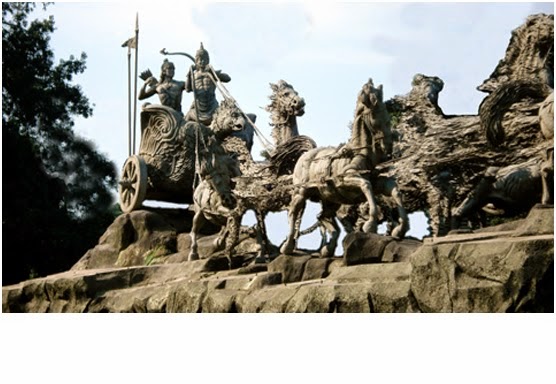
Krishan and Arjuna Sculpture in the middle of the capital city Jakarta in Indonesia


Khmer Monarch pays homage to Lord Shiva  

The golden Shwedogon pagoda (Budhist) in Myanmar
Angkor Wat in Cambodia is the largest Vishnu temple (The temple complex is around 200 SQ KM)